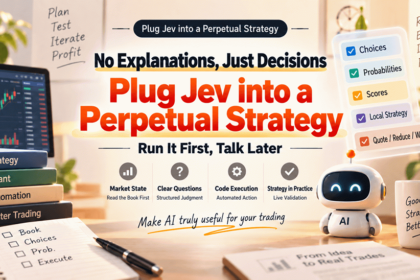
Last year, when Alpha Arena was making the rounds, several AI models were put into live trading environments, and every gain or loss sparked another round of discussion. Quant traders paid especially ...
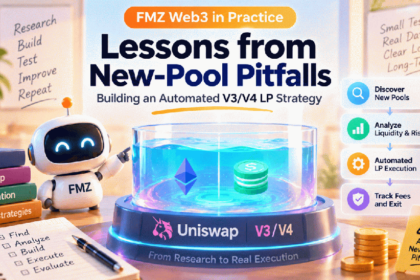
In the previous article, we connected FMZ to Robinhood Chain and built a Uniswap V4 new-pool radar. Once a new pool appeared, the program could quickly capture information such as the trading pai...
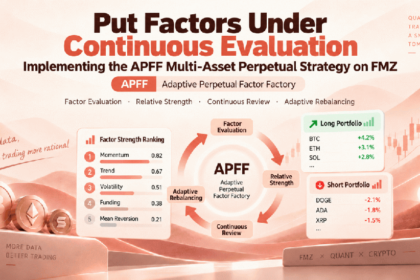
Put Factors Under Continuous Evaluation: Implementing the APFF Multi-Asset Perpetual Strategy on FMZ
Writing a momentum factor is not difficult. Writing a mean-reversion factor is not difficult either. The real hesitation begins when two factors give opposite opinions today: which one should the capi...
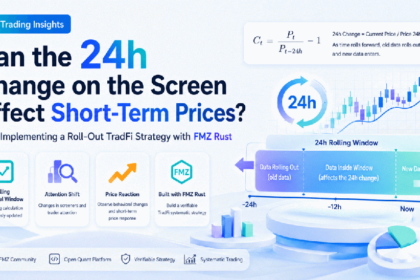
This article studies a behavioral-finance hypothesis created by a rolling statistical window. Instead of directly forecasting future prices, we calculate in advance how the 24h percentage change trade...
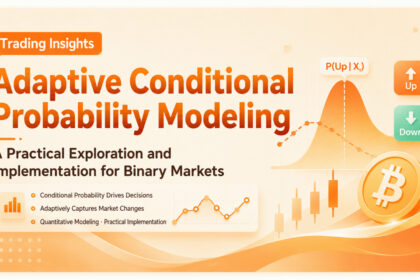
I had wanted for some time to build a relatively complete model for binary markets. At first glance, these markets look simple. Take Polymarket’s 15-minute BTC Up/Down market as an example: each...
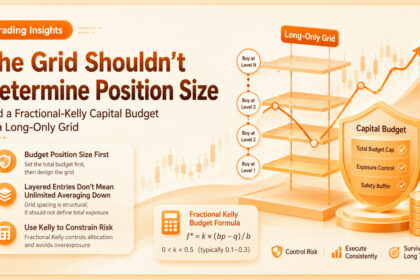
A grid answers the question, “At what price should the strategy take an action?” Kelly answers a different question: “How much capital may the entire strategy use at most?” Only by separating these tw...
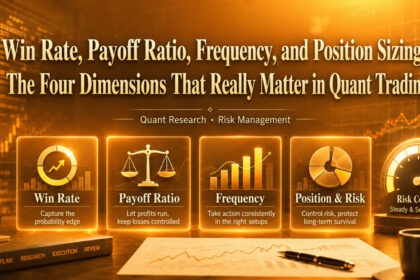
A quantitative strategy can be as complex as you like, but complexity alone does not tell you whether the strategy is worth trading. Moving averages, RSI, machine-learning models, and even more sophis...
This strategy is intended solely for quantitative research and software design discussion. It does not constitute investment advice. DCA can accumulate exposure during one-way markets, and stop-loss o...
From a grid strategy that nearly blew up the account to a complete rewrite built together with AI A grid running on the Korean equity market revealed four painful flaws in live trading. Following thos...

On the very first day GPT 5.6 launched, I wanted to try it out. I could have written a small utility, run a few prompts, and called that an evaluation. But that felt a little pointless. To find out wh...